
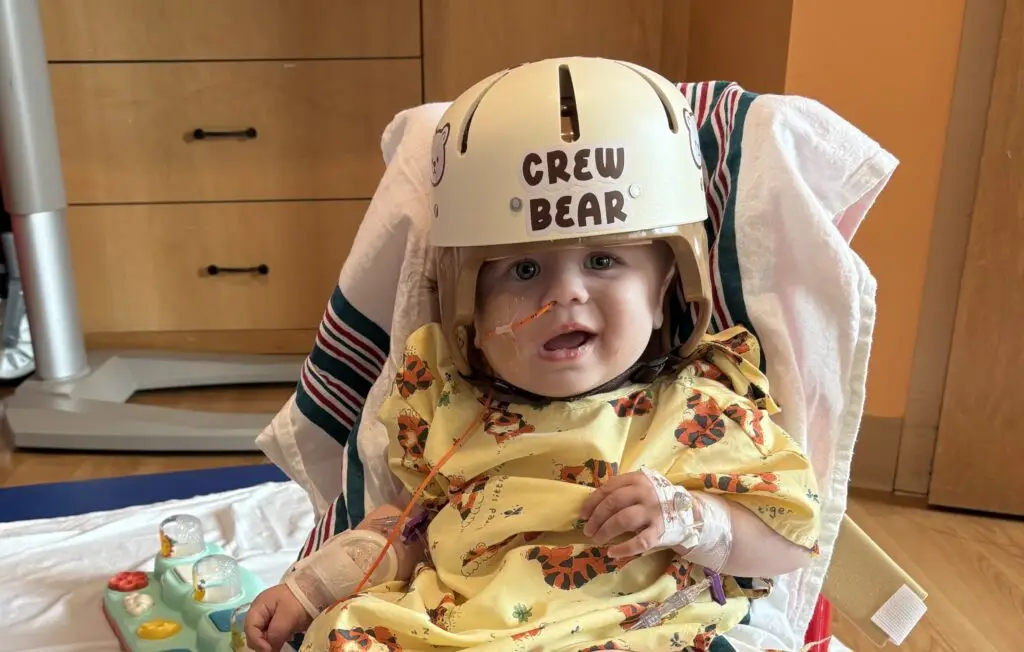
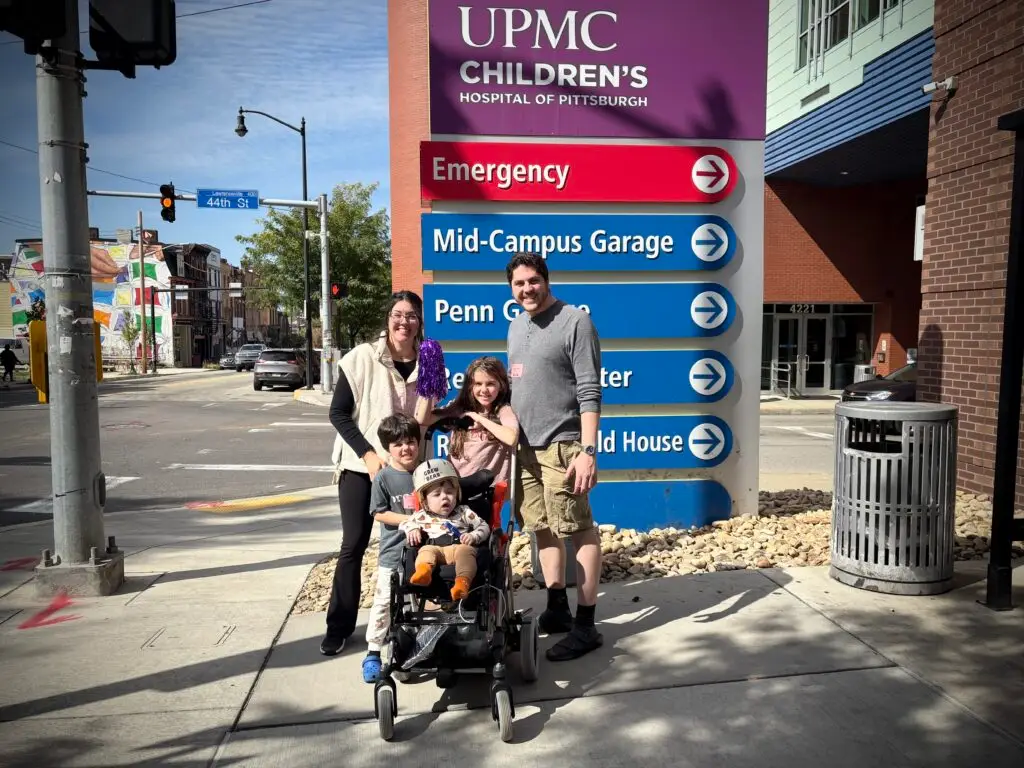
It was a normal summer day in late July 2025. Demetrius and Madison were home in Plum with their three children, Mila, 7, Levi, 3, and Crew, 9 months.
Crew, an easygoing baby, was in his highchair when his parents heard him make a strange sound. Madison lifted Crew from his highchair, noticing how tired he looked, and rocked him to sleep. It was unusual, but not enough to raise concern.
Trusting Their Instincts
As the afternoon went on, Crew became more lethargic and wasn’t eating. Demetrius and Madison brought him to his pediatrician, who recommended a trip to the Emergency Department after noting that Crew could no longer sit up on his own.
When Everything Goes Black
With their three children in tow, Demetrius and Madison headed to UPMC Children’s. In the ED, the atmosphere quickly shifted.
Tests were ordered, including a CT scan. A nurse escorted Mila and Levi from the room, keeping them busy while staff attended to their brother.
And then Crew’s heart rate dropped.
Here, Madison pauses in the retelling. She looks to her husband and takes a deep breath. “For me, that’s when everything goes black.”
A Lifesaving Intervention
Crew was quickly surrounded by a team of physicians and staff and intubated. He was rushed to the fourth floor, where his parents met Taylor Abel, MD, chief of Pediatric Neurosurgery. Dr. Abel explained that the CT revealed a massive bleed in Crew’s brain. Crew’s life was in danger, and he needed immediate surgery.
In the hours that followed, the family waited in uncertainty as Dr. Abel and vascular neurosurgeon Georgios Zenonos, MD, performed a complicated craniectomy, temporarily removing part of Crew’s skull to relieve pressure on his brain and clip a large, ruptured aneurysm.
“For hours, we waited, not knowing if our baby was alive or not,” Madison says. “It was the scariest thing in the world.”
When the surgery was over, Dr. Abel and Dr. Zenonos met with the worried parents. They knelt down and gently explained that Crew was alive, but he had a long road ahead of him.
Intensive Care
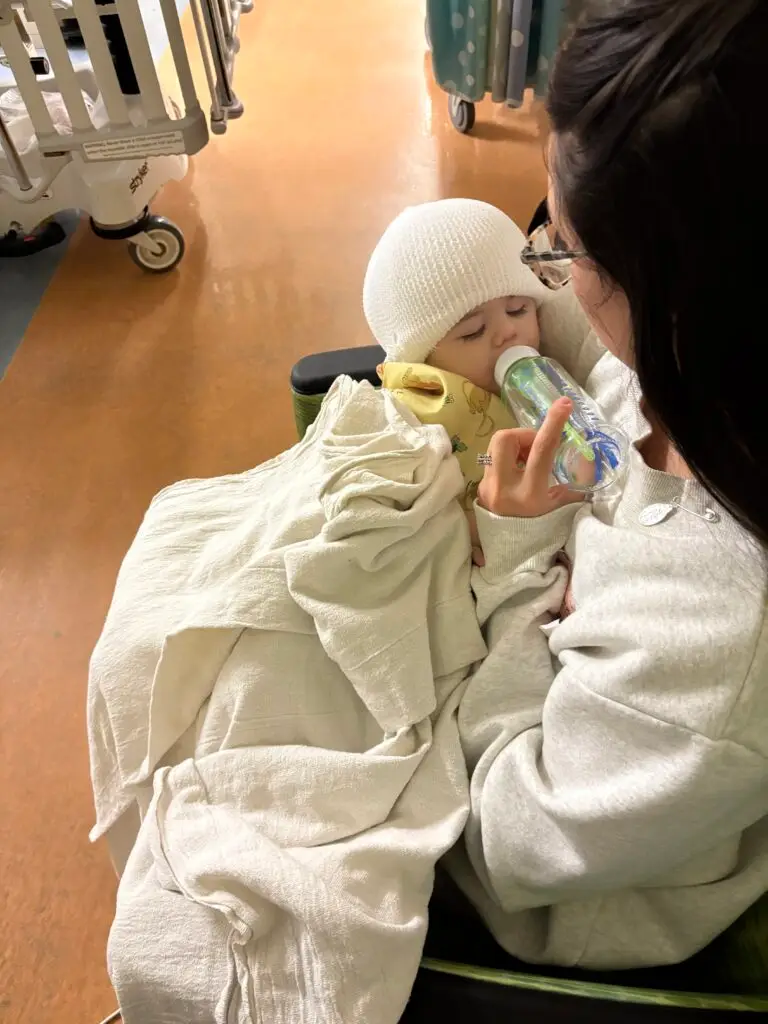
Crew was transferred to the Pediatric Intensive Care Unit (PICU), where he remained intubated and heavily sedated, with half of his skull removed to relieve swelling.
Over the next two weeks, Crew faced repeated setbacks, including a high fever, a
blood clot, and a collapsed lung.
“It was a challenging experience,” Madison says of their time in the PICU. “It was so difficult, but we were amazed how everyone in that ICU worked together as one team.”
“All these physicians and nurses with different specialties shared a singular purpose: to keep Crew alive,” Demetrius adds. “It was incredible.”
Surrounded by Family
Throughout Crew’s hospitalization, the medical team made Demetrius and Madison active participants in their son’s care. “We were included in rounds and involved in care decisions,” Madison says. “We felt empowered by the clinicians.”
When Mila and Levi were ready to visit, Child Life Specialist Alexis Hill, MS, CCLS, prepared them, even creating a PowerPoint presentation to explain Crew’s condition to Mila, who was curious.
With Alexis by their side, Mila and Levi were brought into the PICU to see their baby brother. Surrounded by beeping machines, with tubes attached to his little body, and a helmet covering his open skull, Crew did not look like himself.
Calmly, the siblings approached. Without hesitation, 7-year-old Mila took Crew’s hand in hers and started talking to him softly. “That was a critical point in Crew’s path toward healing,” Madison shares. “I truly believe that having his family, his siblings present, helped in Crew’s recovery.”
Small Wins and Big Gains
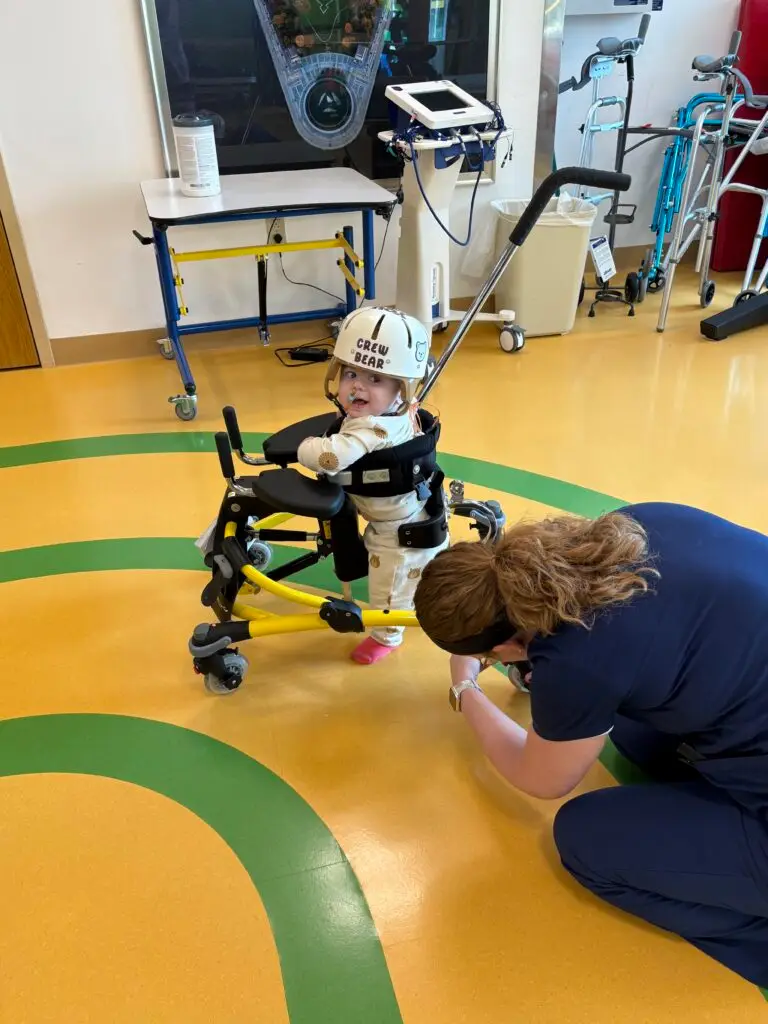
Over the next few days, Crew’s swelling subsided, and he was gradually brought out of sedation. When he awoke, it became clear that the brain injury had affected the right side of his body. Diagnosed with right-sided spastic hemiplegia, Crew would need to relearn the majority of the skills he had already mastered.
Under the guidance of his care team, including Pediatric Neurosurgeon Cody L. Nesvick, MD, and therapists in physical, occupational, and speech therapy, Crew began the slow process of recovery.
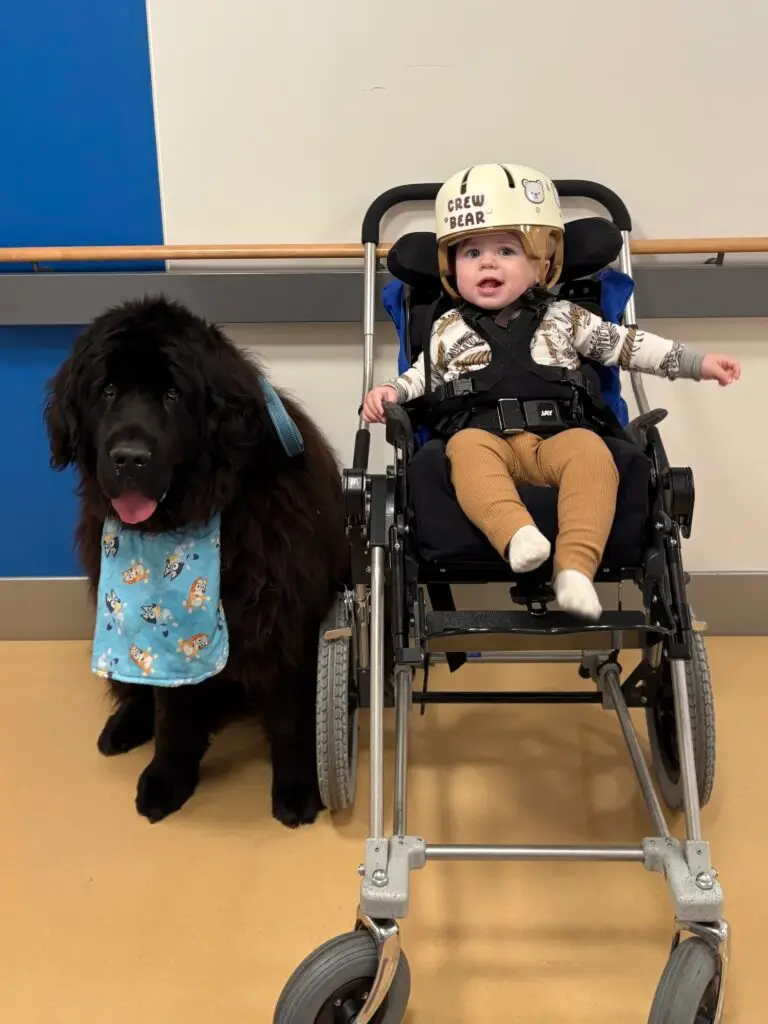
He was transferred to the Children’s Hospital Rehabilitation Unit (CHRU). With a team of therapists guiding him, he began to regain strength and independence.
As he grew stronger, Crew started to seem more like himself again, smiling and engaging with his family.
“I remember one time, he was being fed puree,” Demetrius says. “He grabbed the
spoon and started feeding himself. That was a huge win!”
Home Again
Finally, after two months in the hospital, Crew was discharged home in late September without his skull piece, beginning a new phase of recovery. He wore a protective helmet around the clock until November 10, when he returned to UPMC Children’s for cranioplasty surgery with Dr. Nesvick.
Today, Crew receives outpatient therapies several times a week through UPMC Children’s. His parents share that he is happy and healthy, and growing stronger each day.
Full of Joy
Physicians aren’t sure why this happened to Crew. They know the brain bleed was caused by a ruptured brain aneurysm, but why the brain aneurysm occurred in the first place remains a mystery.
Now nearing his second birthday, Crew loves cars, reading books, and playing outside with his siblings, Mila and Levi, and two dogs. He is a loving, vibrant child who continues to demonstrate remarkable resilience.
“Without all the hands that had a part in caring for Crew, we would not be where we are today as a family,” Madison shares.
“Watching Crew now — full of life, joy, and wonder — reminds us every single day how incredible he truly is,” Demetrius says. “And that would not be possible without the extraordinary care he received at Children’s.”